
1CL9 Pantheon
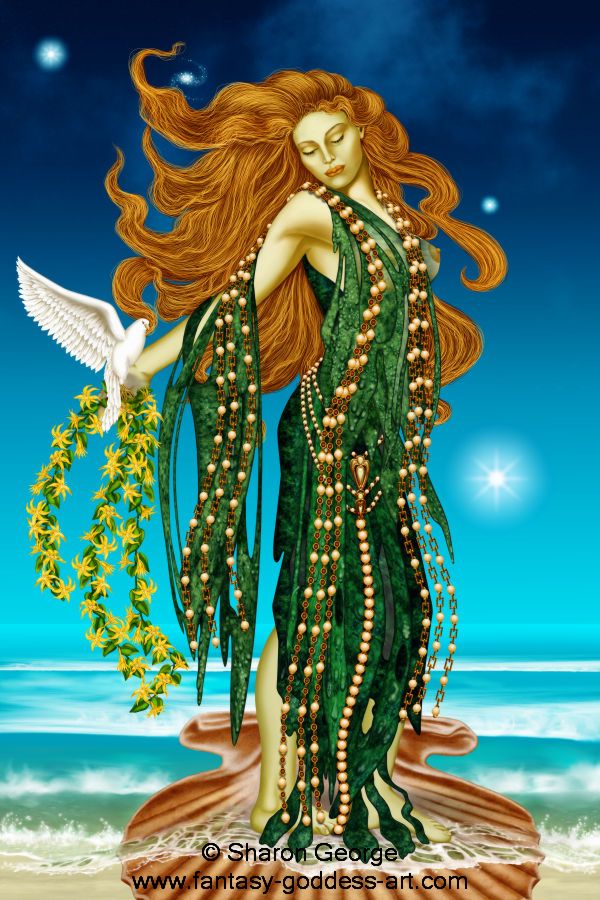
A common Wiccan approach, pantheism is the belief in numerous Gods and Goddesses. It may or may not preclude belief in any of the above variants, since the numerous deities may be emanations or underlings of a superior being. Polytheism may be inclusive (that is, all deities are awarded equal credence), preferential (one pantheon might be given more respect than others) or exclusive (certain pantheons may be excepted from belief – it’s not uncommon, for example, to hear polytheistic Pagans stating, perhaps with questionable logic, that they disbelieve in Satan since he belongs to the Christian, rather than a Pagan, pantheon).
Now, Pantheons are simply different Gods and Goddesses that belong to a certain culture, area of the world and mythology. There are many pantheons, some of which are linked at the top of this page. You might well recognise some of the Deities listed in any given Pantheon- you might have read and learned about them in school, right alongside the history of a culture.
Why? Goddesses and Gods play a major role in all cultures.
The Gods and Goddesses each rule different aspects and can be used in spell-crafting, calling upon them to help in your spell or reason for casting a circle. An altar tribute can be made to them and your personal Patron/ Matron Deity could be found in the in one of the pantheons.

Among Neopagans in general there is a tendency to like making things simple and easy. Simplified rituals, simple chants, a belief that anything published is valid, and grocery lists of associations for various deities. There are websites now that will list a series of deities, give a superficial amount of information regarding each, some “situations to call on this deity”, and maybe a handful of correspondences. These lists treat the gods themselves as tools in a box, to be brought out when needed and thrown back just as readily, and not as entities with personalities, thoughts, and minds of their own.
To use the examples I found on another web site, A website like this contains a name, a purpose, and maybe some contact information (the associations). An analogous situation would be writing “for a good time call Jenny at 867-5309” on the bathroom wall (with apologies to Tommy Tutone). “Fix all your problems in love! Call Frigg today! Having trouble with an ex who won't leave you alone? Macha is just a phone call away!”
It is a matter of respect: there is more to the deity than a sphere of influence, a power day, and an elemental association or what can be read most basic introductory books. These kinds of sources offer very little help unless you already know your pantheon. The lack of information is tremendously disrespectful to both the deity and to those who follow that deity and who take their path seriously.
One of the most perplexing aspects of Pagan religions for someone who is coming from a monotheistic religion is the multiplicity of deities. How can we tell the difference between Odin, Zeus and Jupiter, when all of them do the same thing? How is Hera significantly different from Danu? How is Kali different from The Morrigan? Why should I, as a new Pagan, start worshiping deities that I have been told my whole life are inferior to my God? How do I pick a deity pair that I can feel comfortable with? All these questions are important.
One of the most important things to keep in mind is that despite what you may think you have read, these deities are not cardboard cutouts of each other. Just because you like the name Lillith, you cannot substitute Lillith for Tailtu. There is no divine "melting pot" as diverse as our culture might be, remember their origins. Three from Column A, and five from Column B.... These deities have their own personality, their own life, their own interests and abilities.
Also, pulling deities, no matter how appropriate one may find the connections, from different cultures is generally not a good thing to do. This is due to the fact that in many cases, the deities called upon by this culture were probably enemies of that culture over there, and it's possible that calling upon a God of one culture will cause more problems than anything than you can imagine.
An example would be calling upon Mars and The Morrigan in the same ritual. Mars is the Roman God of War and Conflict. The Morrigan is the Celtic Goddess of War and Strife. Calling for them to be present in your ritual, without thinking about it other than to look at the aspects of Them that you are calling on, will probably result in Mars and The Morrigan fighting - loudly. Which would result in none of your work getting done or worse, they could turn on you for being stupid enough to call them together in the first place.
(As the Romans were mostly responsible for destroying Celtic Culture, as we know it. Julius Caesar destroyed the Gallic Celts as a people, and he invaded what would become Great Britain twice. Other Romans finished the job about a hundred years later. While getting into Scotland or Ireland, although Roman trading coins have been found not only in Scotland, but Ireland. The Romans did, in fact, have a presence in Scotland as evidenced by several walls and forts along the coast. The Romans never fully conquered the area known as Scotland. They most definately had a presence there, but it was tentative at best. Some sources I have seen point to the Romans being scared of the Scots, as evidenced by Hadrian's Wall.)
Understand something, eighty percent of being a priest or priestess and invoking the deities is your willpower and how you approach Them. There are times when the Gods act like children (VERY powerful children) and you have to cajole them, there are times they act like petulant teens and you have to flatter them, and there are times when they act like mature adults and you have to approach them as you would your boss. Each and every encounter with a Deity, either in your meditations or in ritual, will mostly be determined by how you approach them and how They are feeling that day. No two encounters will be alike. The rest of being a priest/ess is the rituals involved and being able to do multiple magickal things at one time.
So, how does one go about selecting a God and Goddess? The very first thing that most of those who have been practicing for a decade or two start with is "God(s) and/or Goddess(s) will best serve the need of this ceremony? Druids will choose from Celtic cultures, Irish, Welsh or Gallic, while Asatru will look to Scandinavia for their ceremony. Wicca in many ways, is free to choose whatever pantheon they want to, simply because it's not tied culturally to any one group of peoples. Most Wiccans, however, tend to pick Celtic deities or Greco-Roman deities, simply because of the amount of information available about them.
How you partner your God and Goddess pairings can amplify the magick of your ceremony. At that point, it's pretty easy to decide based on personal preference and appropriateness. Remember, for a ritual that is for money, it's better to have a deity that is an exact fit, than it is to have a deity that almost fits. It is much easier to get cooperation out of a deity that you have worked with all the time, continuously or consistently, than it is to call upon a deity only once and abandon them. Calling on Brigid is fine, but for the best results, keep working with Her, get to know Her, talk to Her. Don't just call Her up when you want something, or you run the major risk of Her going "You want what? Okay...." Otherwise, remember, these are powerful beings, not your servants or slaves.
In general, when working with a deity, any deity, one must remain respectful and courteous. ALL deities enjoy being flattered and buttered up, and the more you work with them, the more they will come to know you and what you want and need. If I, as a devote' of The Dagda, had porridge for him each time He came to bless me with His presence, and I was respectful of Him in general, then He would be much more likely to cooperate with me when it was an emergency and I didn't have time to go to all the extraordinary lengths I normally go to.
As far as choosing a Patron/Matron deity, I would suggest that you look for qualities in a deity that are compatible with your own personality. Imagine for a moment that you had the chance to pick your parents, your perfect parents, what would you want in them? These are the same qualities that you should be looking for in a Patron/Matron. (A Patron is a male who helps and takes care of you, a father figure. A Matron is the Mother figure.) It should be noted that a Patron and Matron DO NOT have to be one of the fertility or parental deities. I know many people who have warriors or tricksters as their Patron/Matron. It makes for a very interesting life for them.
So, how can you develop a personal and intense relationship with a God? Ideally, start with the source materials about the Gods, mythology. Learning about different facets of Them from available mythos should be one of the first things you do. Pick a deity you are interested in, and read all the stories that you can find on Them. If you don't know which deity you will be interested in, start with a pantheon or culture, and do some brief study of that pantheon. For example, if one were interested in the Greek deities, picking up a copy of Edith Hamilton's "Mythology" would be a good first step. In there are common stories, major deities and basic information on those Gods. From there, more in depth study can be done on those Gods that you are interested in including learning Greek to understand how translation can change stories, sometimes radically.
From there dreaming about Them, studying Them, inviting Them into your rituals and rites, calling upon Them to help you in your times of trial, and doing things for Them is no huge step. If things are done properly, you will want to write poetry to for and about Them, share with the world all the things you discovered about the Deity of your choice. And that is a means of worship too.
A small directory of pantheons
Asignment
Study as many pantheons as you wish, they do not have to be Celtic. Pray and Meditate and see if any particular god or goddess calls to you. Write about it.
Pick one god and one goddess and make webpages about them. If you are looking for a free site then try webnode.com.
Do you pick your gods or do they pick you?